Islamic Studies and Seerah Curriculum: Pre-K to Grade 8
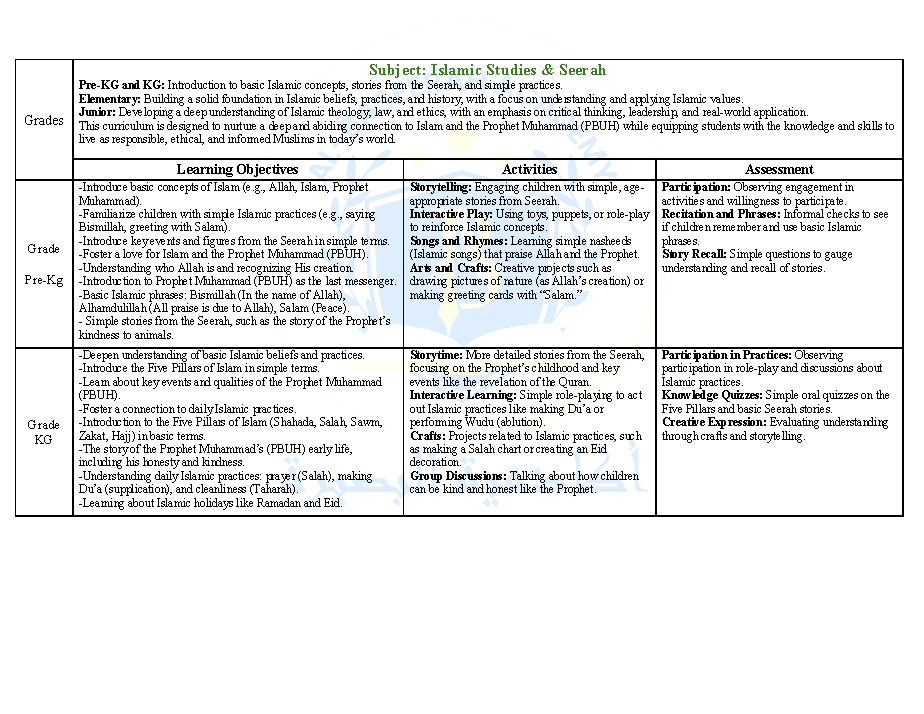
This curriculum is designed to nurture a deep and abiding connection to Islam and the Prophet Muhammad (peace be upon him), while equipping students with the knowledge and skills to live as responsible, ethical and informed Muslims in today’s world.
It runs in three broad stages. Pre-K and Kindergarten introduce basic Islamic concepts, stories from the Seerah and simple practices. Elementary builds a solid foundation in Islamic beliefs, practices and history, with a focus on understanding and applying Islamic values. Junior develops a deep understanding of Islamic theology, law and ethics, with an emphasis on critical thinking, leadership and real-world application.
Pre-K
Learning objectives
- Introduce basic concepts of Islam: Allah, Islam, Prophet Muhammad.
- Familiarize children with simple Islamic practices, such as saying Bismillah and greeting with Salam.
- Introduce key events and figures from the Seerah in simple terms.
- Foster a love for Islam and the Prophet Muhammad (peace be upon him).
- Understanding who Allah is and recognizing His creation.
- Introduction to Prophet Muhammad (peace be upon him) as the last messenger.
- Basic Islamic phrases: Bismillah, Alhamdulillah, Salam.
- Simple stories from the Seerah, such as the story of the Prophet’s kindness to animals.
Activities
- Storytelling: engaging children with simple, age-appropriate stories from the Seerah.
- Interactive play: using toys, puppets and role-play to reinforce Islamic concepts.
- Songs and rhymes: learning simple nasheeds that praise Allah and the Prophet.
- Arts and crafts: creative projects such as drawing pictures of nature as Allah’s creation, or making greeting cards with Salam.
Assessment
- Participation: observing engagement in activities and willingness to take part.
- Recitation and phrases: informal checks to see if children remember and use basic Islamic phrases.
- Story recall: simple questions to gauge understanding and recall of stories.
Kindergarten
Learning objectives
- Deepen understanding of basic Islamic beliefs and practices.
- Introduce the Five Pillars of Islam in simple terms.
- Learn about key events and qualities of the Prophet Muhammad (peace be upon him).
- Foster a connection to daily Islamic practices.
- Introduction to the Five Pillars of Islam (Shahada, Salah, Sawm, Zakat, Hajj) in basic terms.
- The story of the Prophet Muhammad’s early life, including his honesty and kindness.
- Understanding daily Islamic practices: prayer (Salah), making Du’a (supplication) and cleanliness (Taharah).
- Learning about Islamic holidays like Ramadan and Eid.
Activities
- Storytime: more detailed stories from the Seerah, focusing on the Prophet’s childhood and key events such as the revelation of the Quran.
- Interactive learning: simple role-playing to act out Islamic practices like making Du’a or performing Wudu (ablution).
- Crafts: projects related to Islamic practices, such as making a Salah chart or creating an Eid decoration.
- Group discussions: talking about how children can be kind and honest like the Prophet.
Assessment
- Participation in practices: observing participation in role-play and discussions about Islamic practices.
- Knowledge quizzes: simple oral quizzes on the Five Pillars and basic Seerah stories.
- Creative expression: evaluating understanding through crafts and storytelling.
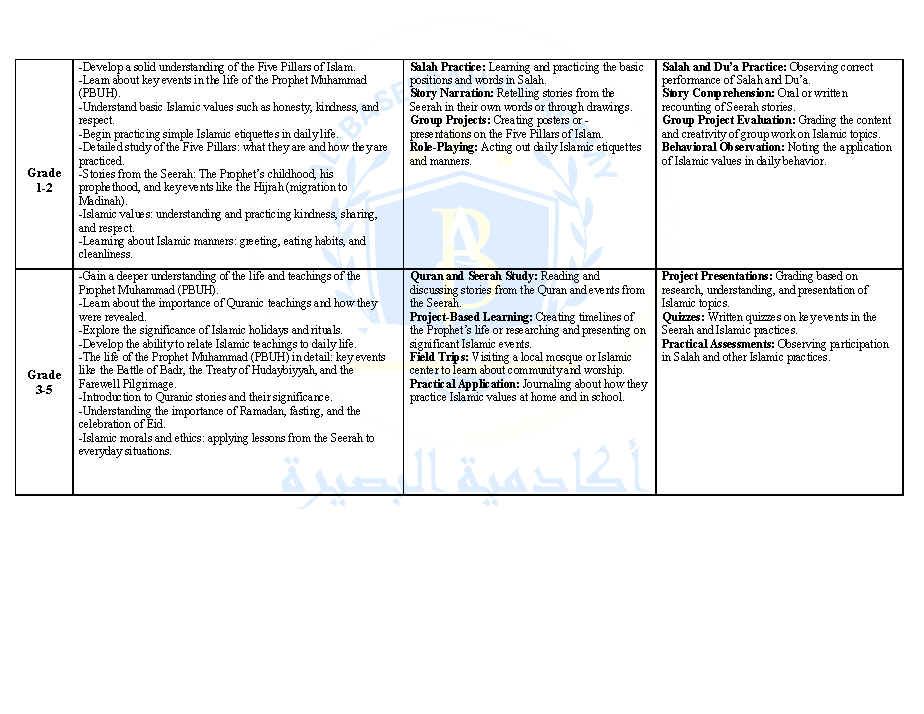
Grades 1 and 2
Learning objectives
- Develop a solid understanding of the Five Pillars of Islam.
- Learn about key events in the life of the Prophet Muhammad (peace be upon him).
- Understand basic Islamic values such as honesty, kindness and respect.
- Begin practicing simple Islamic etiquettes in daily life.
- Detailed study of the Five Pillars: what they are and how they are practiced.
- Stories from the Seerah: the Prophet’s childhood, his prophethood, and key events like the Hijrah (migration to Madinah).
- Islamic values: understanding and practicing kindness, sharing and respect.
- Learning about Islamic manners: greeting, eating habits and cleanliness.
Activities
- Salah practice: learning and practicing the basic positions and words in Salah.
- Story narration: retelling stories from the Seerah in their own words or through drawings.
- Group projects: creating posters or presentations on the Five Pillars of Islam.
- Role-playing: acting out daily Islamic etiquettes and manners.
Assessment
- Salah and Du’a practice: observing correct performance of Salah and Du’a.
- Story comprehension: oral or written recounting of Seerah stories.
- Group project evaluation: grading the content and creativity of group work on Islamic topics.
- Behavioral observation: noting the application of Islamic values in daily behavior.
Grades 3 to 5
Learning objectives
- Gain a deeper understanding of the life and teachings of the Prophet Muhammad (peace be upon him).
- Learn about the importance of Quranic teachings and how they were revealed.
- Explore the significance of Islamic holidays and rituals.
- Develop the ability to relate Islamic teachings to daily life.
- The life of the Prophet Muhammad (peace be upon him) in detail: key events like the Battle of Badr, the Treaty of Hudaybiyyah, and the Farewell Pilgrimage.
- Introduction to Quranic stories and their significance.
- Understanding the importance of Ramadan, fasting and the celebration of Eid.
- Islamic morals and ethics: applying lessons from the Seerah to everyday situations.
Activities
- Quran and Seerah study: reading and discussing stories from the Quran and events from the Seerah.
- Project-based learning: creating timelines of the Prophet’s life or researching and presenting on significant Islamic events.
- Field trips: visiting a local mosque or Islamic center to learn about community and worship.
- Practical application: journaling about how they practice Islamic values at home and in school.
Assessment
- Project presentations: grading based on research, understanding and presentation of Islamic topics.
- Quizzes: written quizzes on key events in the Seerah and Islamic practices.
- Practical assessments: observing participation in Salah and other Islamic practices.
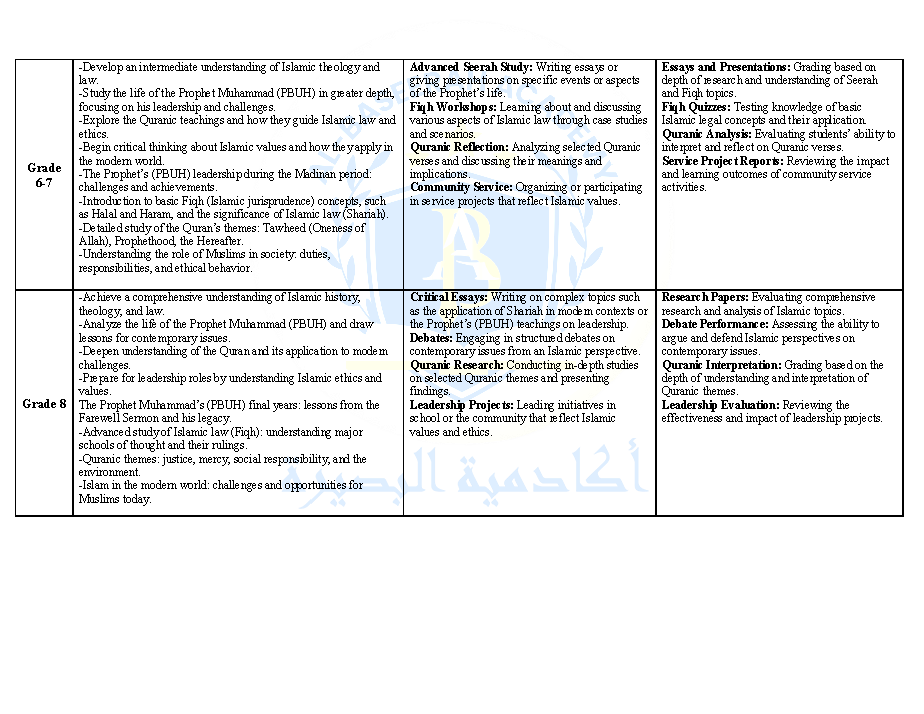
Grades 6 and 7
Learning objectives
- Develop an intermediate understanding of Islamic theology and law.
- Study the life of the Prophet Muhammad (peace be upon him) in greater depth, focusing on his leadership and challenges.
- Explore the Quranic teachings and how they guide Islamic law and ethics.
- Begin critical thinking about Islamic values and how they apply in the modern world.
- The Prophet’s leadership during the Madinan period: challenges and achievements.
- Introduction to basic Fiqh (Islamic jurisprudence) concepts, such as Halal and Haram, and the significance of Islamic law (Shariah).
- Detailed study of the Quran’s themes: Tawheed (Oneness of Allah), Prophethood, the Hereafter.
- Understanding the role of Muslims in society: duties, responsibilities and ethical behavior.
Activities
- Advanced Seerah study: writing essays or giving presentations on specific events or aspects of the Prophet’s life.
- Fiqh workshops: learning about and discussing various aspects of Islamic law through case studies and scenarios.
- Quranic reflection: analyzing selected Quranic verses and discussing their meanings and implications.
- Community service: organizing or participating in service projects that reflect Islamic values.
Assessment
- Essays and presentations: grading based on depth of research and understanding of Seerah and Fiqh topics.
- Fiqh quizzes: testing knowledge of basic Islamic legal concepts and their application.
- Quranic analysis: evaluating students’ ability to interpret and reflect on Quranic verses.
- Service project reports: reviewing the impact and learning outcomes of community service activities.
Grade 8
Learning objectives
- Achieve a comprehensive understanding of Islamic history, theology and law.
- Analyze the life of the Prophet Muhammad (peace be upon him) and draw lessons for contemporary issues.
- Deepen understanding of the Quran and its application to modern challenges.
- Prepare for leadership roles by understanding Islamic ethics and values.
- The Prophet Muhammad’s final years: lessons from the Farewell Sermon and his legacy.
- Advanced study of Islamic law (Fiqh): understanding major schools of thought and their rulings.
- Quranic themes: justice, mercy, social responsibility and the environment.
- Islam in the modern world: challenges and opportunities for Muslims today.
Activities
- Critical essays: writing on complex topics such as the application of Shariah in modern contexts, or the Prophet’s teachings on leadership.
- Debates: engaging in structured debates on contemporary issues from an Islamic perspective.
- Quranic research: conducting in-depth studies on selected Quranic themes and presenting findings.
- Leadership projects: leading initiatives in school or the community that reflect Islamic values and ethics.
Assessment
- Research papers: evaluating comprehensive research and analysis of Islamic topics.
- Debate performance: assessing the ability to argue and defend Islamic perspectives on contemporary issues.
- Quranic interpretation: grading based on depth of understanding and interpretation of Quranic themes.
- Leadership evaluation: reviewing the effectiveness and impact of leadership projects.
Curriculum outline
The same outline as published tables: